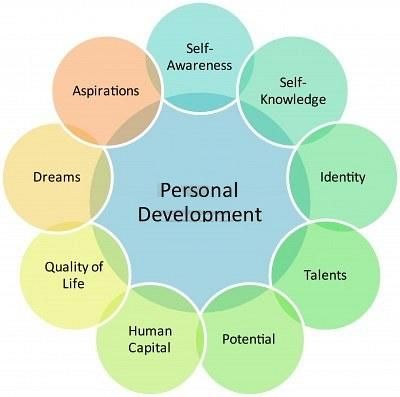
Personal development covers activities that improve awareness and identity, develop talents and potential, build human capital and facilitate employability, enhance the quality of life and contribute to the realization of dreams and aspirations.
To have more than you’ve got, become more than you are.
Ads
Tuesday, 27 February 2018
Monday, 6 November 2017
Seems Like....
Seems Like......
By Nafisat Abdulrasaq
Seems like a long journey but did l just travelled it.
Seems impossible but did l just do it.
Seems unimaginable but did l just make it a reality.
Seems like a long reach but did l just touch it.
Seems like it's unheard of but did l just actualized it.
Seems like a dream but did it just come true.
Seems like it's unscribbleable but did l just write it.
Seems like a big a trial but did the storm just went over.
Seems like an unease but did l just smile from the tingly joy bursting from inner me.
Seems like it's dusk but l did l just saw a new dawn
Tuesday, 24 October 2017
Gratitude
Gratitude
After all, "good manners and gratitude overlap," says New York City etiquette consultant Melissa Leonard, a mother of two young daughters.
How to Teach Gratitude
✅Say Thank you
✅Work gratitude into your daily conversation
✅Have kids help
✅Find a goodwill project
✅Encourage generosity
✅Insist on thank-you notes
✅Practice saying no
✅Be patient
✅ Gratitude is about more than gifts
✅ Let them know when you’re disappointed
✅ Read books that re-inforce the importance of gratitude
✅ Teach "'lt's better to give than to receive." Even toddlers can buy or make gifts for others
✅ Remember, raising thankful children is part of the job
After all, "good manners and gratitude overlap," says New York City etiquette consultant Melissa Leonard, a mother of two young daughters.
How to Teach Gratitude
✅Say Thank you
✅Work gratitude into your daily conversation
✅Have kids help
✅Find a goodwill project
✅Encourage generosity
✅Insist on thank-you notes
✅Practice saying no
✅Be patient
✅ Gratitude is about more than gifts
✅ Let them know when you’re disappointed
✅ Read books that re-inforce the importance of gratitude
✅ Teach "'lt's better to give than to receive." Even toddlers can buy or make gifts for others
✅ Remember, raising thankful children is part of the job
Wednesday, 18 October 2017
Did you dare to......
Did you dare to dream ?
Did you dare to inspire?
Did you dare to aspire?
Did you dare to acquire ?
Did you dare to influence ?
Did you dare to motivate?
Did you dare to..........
And so the sweats of years ago became the gain today.
And so the scarfices of years back became the future of today.
And so the dreams of yesterday became the reality of today.
And so the struggle for survival became the ladder for success.
And so the thoughts lingering on became the slogan for the next level.
Then the cause to motivate came.
Then the thoughts to influence.
Then the silent voice became words on Marble.
Then the struggle for survival became a passion for great things.
Then the dare to dream became a motivation for success.
Then the random musings became a source of inspiration and support to nurture great lives.
Monday, 7 August 2017
5 Ways to Promote Social and Emotional Development in Young Children
What is Social Emotional Learning and why is it important? In a nutshell, it’s recognizing our emotions, having some control over them, having empathy for others, handling conflict well, and making good choices about personal and social behavior. These skills are critical to school (and life) success. Believe it or not, these things need to be taught and the best time to begin is early! Guess what else: YOU are your child’s best teacher. So lets see how we can start.
1. Self-Awareness
This just means recognizing your own emotions. To promote your baby’s self-awareness, start at birth by responding positively to his cries. This will help him feel secure and safe. Babies need attention, patience, and lots of face-to-face time. In the toddler years, help him identify and name his emotions. When he’s showing signs of a tantrum, talk to him about feeling frustrated and encourage him to begin labeling how he feels. This will free him to understand and regulate his own emotions.
2. Self-Management
This is simply learning to control your own emotions and behavior. As your child learns to label her emotions, you can begin to teach her how to control them rather than letting her emotions control her. Toddlers need an example to follow; model for her how you control your own emotions and how you address them in healthy ways (taking a time-out, meditation, prayer, a deep breath, counting to 10). Also, pay attention to how you interact with other adults in the home. Constant tension between her caregivers creates a sense of insecurity which can lead to behavioral problems once she’s in school.
3. Social Awareness
Show empathy and understanding towards others. Help your toddler learn empathy by listening well to him and encouraging him to listen well to others. Encourage his curiosity and sociability by engaging in your community. Take him with you as you run errands and interact with others. Model for him appropriate ways to interact with people who are different from you. Knowing how to positively engage with others and understand their feelings will have lifelong benefits.
4. Relationship Skills
Successful relationships require the ability to handle conflicts responsibly. Again, you are the example your child will follow most closely. Teach her to respect people’s differences, resist comparing her to other children, and most importantly, apologize when you mess up.
5. Responsible Decision Making
Making positive choices about personal and social behavior will be key to your child’s success in life. Encourage a healthy sense of self-esteem by giving him responsibilities at home and allowing him to make age-appropriate choices on his own. Show him your appreciation when he helps around the house. He wants your attention. Praise him and encourage him positively as often as you can. Let your positive comments far outweigh your negative ones. It will do wonders for his self-esteem.
Tuesday, 25 July 2017
What's the big thought?
Personal development covers activities that improve awareness and identity, develop talents and potential, build human capital and facilitate employability, enhance the quality of life and contribute to the realization of dreams and aspirations.
To have more than you’ve got, become more than you are.
Monday, 10 July 2017
Involve me and l Learn
Benefits of Involving Children In Classroom Activities
If You Can’t Beat Them, Join Them
Technology is here to stay. Mobile devices, video games, apps and electronics are a major part of life for children today. Rather than fight these influences in their lives, teachers need to bring technology into the classroom and incorporate it with learning activities. Many teachers are now including online components in their courses. Students need to look at a site at home to discover assignments, post responses and interact with their classmates. Tablets are in use beginning in preschool as children participate in learning games, create cartoons and write stories that can make a splash on the Internet.
Hands-On Is A Plus
When students can be involved in hands-on learning, teachers will be able to keep their interest. Math lessons are more effective through the use of manipulatives. Projects involving cooperative learning will light a spark in social studies and English. Science labs are often the highlight of the day when children can use equipment and perform experiments.
Give Students Empowerment
Children need to be given responsibility. When they have duties in the classroom, they will be learning real-life skills. Allow them to decide on the jobs necessary to create a task, delegating authority amongst themselves. Make sure every child is clear about his or her role in a given situation. Children need to understand having roles is a good representation of what will happen in the real world when co-workers must work together.
Let Children Be Problem-Solvers
Present a problem to students and let them run with it. Allow children to look at a topic from many different angles, do their own research and come up with various solutions. It’s important for students to realize there are many ways to come up with the correct answer. Creative thinking and time to process information is a must.
Active involvement is key in a successful classroom. If our students are to excel, they need to pursue an education with eagerness, opening new horizons for themselves.
Source:Getting Smart
Kandace Heller
Subscribe to:
Posts
(
Atom
)